AI In the Movie Industry: Future or Downfall?
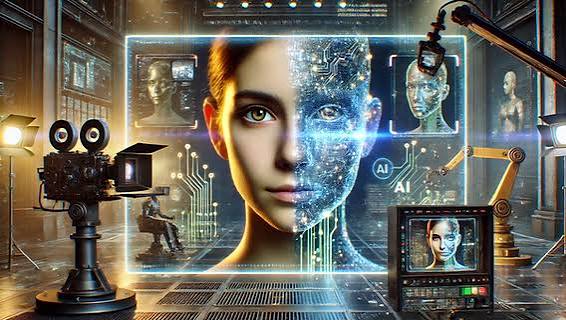
Artificial Intelligence in the movie industry has changed the way movies are produced. Many major movie corporations such as The Walt Disney Company, Warner Bros. Discovery, and Universal Pictures have aggressively integrated AI tools into their movies. Through the increased usage of AI technology in movie production, visual effects and post production are becoming dramatically faster and more cost effective. However, AI should have regulations to prevent the loss of human quality and artistic creativity in movies otherwise films would lose their human nature.
To understand why studios are rapidly adding AI to films, it helps to look at the amount of time and money it saves during production. Animation and visual effects usually take countless hours of hard work from talented artists. Companies like the Walt Disney Company use machine learning through studios like Industrial Light & Magic to speed up tasks such as digital de-aging, facial capture, and cleaning up grainy computer renders. Similarly, Warner Bros. Discovery has included AI-driven analytics and post-production tools to guide movie production, distribution, and business decisions.
While these financial advantages explain why studios embrace artificial intelligence, the over-reliance on automated tools threatens the authentic artistic creativity in movies. Movies require great creativity and human quality that AI cannot recreate. Because AI generates visuals and dialogue by analyzing existing data, it recycles patterns from past movies rather than creating original insights. When studios rely too heavily on generative tools to write scripts or design scenes, films risk becoming repetitive, predictable, and emotionally hollow.
Furthermore, true artistic quality comes from the human imperfections that happen on set and in the editing room. An actor’s improvised pause or a director’s instinct to adjust lighting can turn a good scene into an unforgettable one. When corporations prioritize financial efficiency over skilled screenwriters, animators, and concept artists, they also shrink opportunities for new creators to share their ideas.
In conclusion, AI in the movie industry speeds up post production time, saves money, and enhances creativity and quality in some cases however, it should have regulations on how much can be used in a film to prevent the movie from losing its human quality and creativity. AI tools can be an excellent tool in films but the industry needs to make sure it is used in moderation.